
Looking for agentic AI that actually gets work done? Here’s a short list of the most capable tools, plus a quick comparison so you can pick the right one for your team.
1. Donely (Our Top Pick) , All‑in‑One Agentic AI Platform
Donely is a self‑serve SaaS platform that lets you launch OpenClaw agents in seconds. It bundles a unified dashboard, role‑based access control (RBAC), audit logs and 800+ integrations.
Solo founders love the one‑click setup. Early‑stage startups get a scalable way to add AI employees for sales, support or finance without hiring engineers.
Donely’s multi‑instance design lets digital agencies spin up separate bots for each client, keeping data isolated and billing clear. The built‑in RBAC makes sure an agent can only see the tools you let it use, which satisfies most compliance checks.
Because the platform handles memory, tool calling and error recovery out of the box, you spend time on business logic, not on glue code. Top AI Agent Examples – Donely shows real‑world bots built on the system.
One caveat: highly custom workflows may need extra code to talk to niche APIs. In that case you can still use Donely’s “custom tool” feature, but expect a short learning curve.
2. AutoGPT , Autonomous Task‑Solving Agent
AutoGPT is an open‑source framework that treats a large language model as the brain of a loop. You give it a goal, and it breaks the goal into subtasks, picks tools, and runs until the objective is met.
Developers appreciate the full control over prompts, memory stores and tool plugins. The project ships with a marketplace of ready‑made agents for tasks like video script generation or data extraction.
Typical use cases include generating weekly reports from scattered sources, summarizing research papers, or automating simple CRM updates.
AutoGPT’s community keeps the codebase fresh, and the GitHub repo offers dozens of examples you can clone. Top 8 AI Agent Workflow Platforms for 2026 – Donely references AutoGPT as a core building block for many custom pipelines.
Be aware that the loop can be slower than a single‑prompt call because each step involves a model call and a tool invocation. For low‑latency needs, consider a tighter‑integrated SaaS option.
3. AgentGPT , Customizable Agent Builder
AgentGPT lets you craft agents without writing code. You describe the agent’s role in plain language, select an LLM and the platform assembles the loop for you.
It’s a good fit for product managers who need a quick proof of concept. You can spin up a research assistant, a sales qualifier or a simple help‑desk bot in minutes.
The interface shows a live view of the reasoning chain, so you can debug why the agent chose a particular tool. It also supports multi‑agent orchestration, letting one agent hand off to another when a task grows complex.
AgentGPT integrates with Zapier‑style connectors, so you can push results to a spreadsheet, a Slack channel or a CRM without a developer.
One limitation is that advanced memory handling still relies on the underlying LLM’s context window. Very long projects may need you to add external storage yourself.
For a deeper look at how agentic AI differs from plain generative AI, see IBM’s comparison of agentic and generative AI.
4. BabyAGI , Simple Agentic Loop Prototype
BabyAGI is a minimalist proof‑of‑concept that shows the core loop of perception, reasoning and action. It uses a single LLM, a short‑term memory store and a tool‑calling wrapper.
The code lives on GitHub and can be run locally in minutes. It’s often the first stepping stone for hobbyists who want to see an autonomous agent in action.
Because the project is intentionally tiny, it lacks built‑in governance, RBAC or audit logs. That makes it unsuitable for production workloads but perfect for learning.
Typical experiments include having the agent scrape a website, summarize the content and write a short blog post. You can add more tools to the loop as you get comfortable.
Remember to keep the LLM’s temperature low; otherwise the agent may wander off the intended path.

Bottom line: BabyAGI teaches the basics without the bells and whistles.
5. Replit AI , Collaborative Agentic Coding Assistant
Replit AI adds an autonomous coding buddy to the popular online IDE. It can read a codebase, suggest refactors, write new functions and even run tests.
What sets it apart is the “pair‑programming” mode, where the assistant watches your cursor and offers real‑time suggestions. It also has a built‑in tool runner, so it can execute code snippets and feed results back into the conversation.
Teams use it to speed up onboarding, reduce boilerplate and catch bugs early. The platform stores each session, so you can replay the assistant’s reasoning later.
Because Replit runs in the browser, there’s no need to install anything locally. The AI works on any language supported by the IDE, from Python to Rust.
A drawback is that the model’s knowledge is capped at its training cut‑off, so it may suggest outdated libraries. Pairing the assistant with a version‑check script solves that.
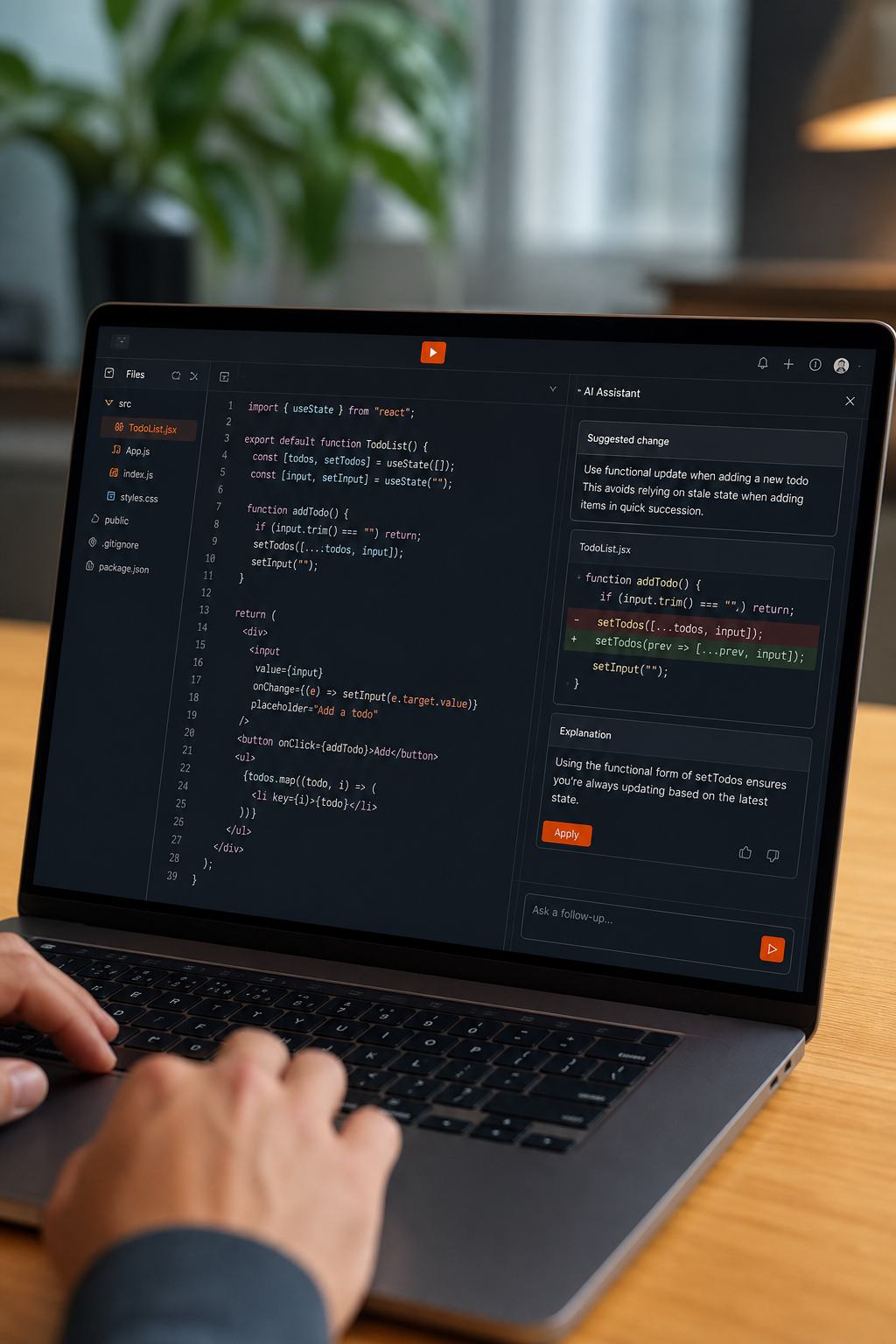
Pro tip: Use the “run‑and‑review” feature to let the assistant execute a function and then critique the output.
6. Agentic AI Tools Comparison Table
FAQ
What is agentic AI?
Agentic AI is a class of systems that can plan, act and adapt on their own, using tools and memory to reach a goal. Unlike a simple chatbot, it runs a loop of perception, reasoning and execution. Wikipedia explains the broader AI context.
How does Donely differ from AutoGPT?
Donely is a hosted SaaS platform with a ready‑made dashboard and built‑in compliance features; AutoGPT is an open‑source framework that gives you raw control over every step of the loop.
Can I run BabyAGI in production?
BabyAGI is designed as a learning tool, not a production‑grade system. It lacks RBAC, audit logs and scaling features that enterprises need.
Is Replit AI free to use?
Replit AI offers a free tier with limited monthly compute; paid plans unlock higher token limits and private workspace isolation.
Which tool should a solo founder pick first?
For a solo founder, Donely provides the quickest path to a functional AI employee with minimal setup, while still allowing later migration to a custom stack if needed.
Conclusion
If you need a production‑ready agent today, start with Donely and spin up a sales or support bot in minutes. Then experiment with AutoGPT or BabyAGI to push the limits of what your AI workforce can do.