
Choosing a pricing model feels like a maze. One path charges for each running instance, the other for every user seat. Both promise revenue, but they affect cost, growth, and risk in very different ways. In this guide we break down 14 concrete options, give real‑world examples, and hand you a checklist so you can decide which model fits your product and customers best.
1. Per‑Instance Pricing for Data‑Intensive Applications
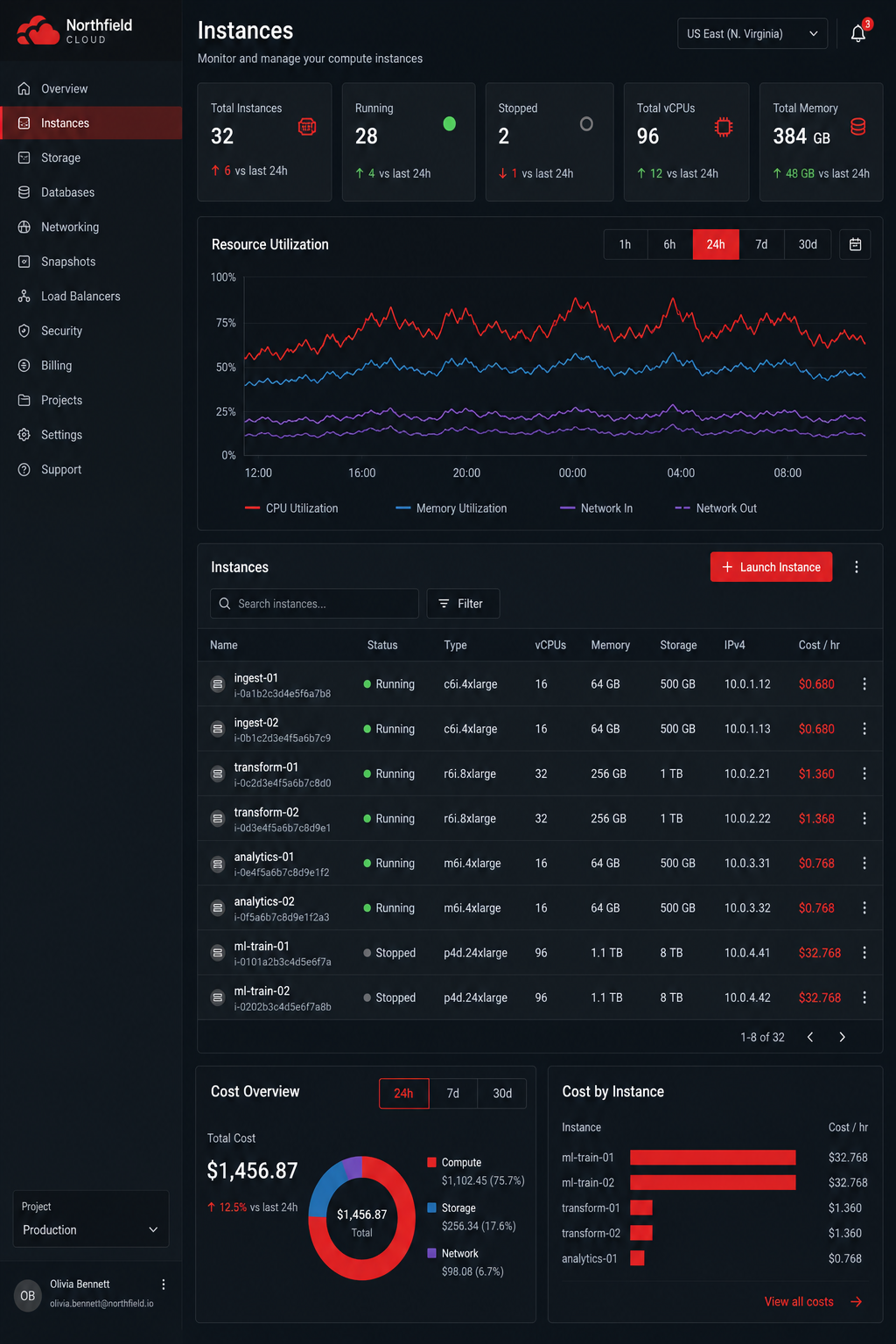
Per‑instance pricing ties the bill to each deployed compute unit. Think of a video‑processing service that spins up a GPU container for every customer job. The customer pays $25 per instance per month, regardless of how many users log in to that instance. This model shines when the workload is heavy, predictable, and tied to infrastructure cost.
Because you charge for the actual server or container, you can directly map cloud spend to revenue. Cloud provider pricing shows how on‑demand, spot, and reserved rates translate into per‑instance cost, giving you a clear cost‑plus margin.
And when you bundle a managed service on top, you add value without adding extra seats.
Imagine a biotech startup that needs a secure AI model for gene‑sequence analysis. They run one isolated instance per research team. The team grows, but the number of instances stays the same, so the bill stays flat. That predictability helps budgeting.
Pros:
- Costs match cloud spend
- Easy to forecast for fixed workloads
- Scales with infrastructure, not user count
Cons:
- Can be pricey for low‑usage customers
- May discourage small teams from trying the product
Key takeaway: If your SaaS runs heavy compute or isolated environments, per‑instance pricing aligns revenue with actual resource use.
2. Per‑User Pricing for Team Collaboration Tools
Per‑user pricing is the classic seat‑based model. Every named account or login costs a set fee each month. It works well for tools that add value with each additional collaborator, think project boards, chat apps, or CRM platforms.
According to industry analysts, the model is transparent: the bill scales directly with the number of people who need access. Companies like messaging and project management platforms use it because the more teammates you add, the more messages, tasks, or contacts get created, creating clear value per seat.
Let’s say a digital agency adopts a collaboration suite for ten clients. Each client gets five seats. The agency pays $10 per seat, so the monthly bill is $500. If they land a new client, they simply add five more seats and the cost rises proportionally.
Pros:
- Straightforward pricing for buyers
- Predictable revenue as teams grow
- Fits products where each user adds functional value
Cons:
- Costs can explode for large orgs
- May create friction if users are idle but still billed
Key takeaway: Per‑user works best for collaboration‑heavy SaaS where each added person unlocks new work output.

3. Hybrid Models Combining Both Structures
Hybrid pricing blends per‑instance and per‑user elements. A common pattern is a base fee for each instance plus a per‑seat surcharge for active users. This lets you capture both infrastructure cost and the added value of more collaborators.
Take an AI‑agent platform that hosts a separate instance per client. The client pays $20 per instance plus $5 for each active user. If a client runs three instances with twenty users total, the bill is $20×3 + $5×20 = $110 per month. The model rewards clients who keep users active while covering the heavy compute each instance requires.
Hybrid models also appear as tiered plans: a “Starter” tier gives one instance and up to five users; a “Growth” tier adds more instances and unlimited users. The tiered approach reduces price‑shock and simplifies sales conversations.
We embed a quick video that walks through a hybrid pricing calculator.
Pros:
- Captures both compute and seat value
- Flexibility for diverse customer segments
- Reduces churn by aligning cost with usage
Cons:
- More complex to explain
- Requires strong billing infrastructure
Key takeaway: Hybrid pricing gives you the best of both worlds when your product has heavy compute and strong collaboration features.
4. Usage‑Based Pricing as an Alternative
Usage‑based pricing (also called pay‑as‑you‑go) bills customers for the exact amount of resources they consume, API calls, data processed, or compute minutes. It eliminates fixed fees and aligns cost with value delivered.
The model is popular for AI inference services. A customer might pay $0.001 per request. If they send 100,000 requests, they pay $100. This can be a win for low‑volume users who would otherwise pay a high flat fee.
One downside is unpredictability. A sudden spike in traffic can cause a bill to jump dramatically. Companies often add caps or alerts to keep customers from surprise invoices.
Pros:
- Highly fair, pay only for what you use
- Low entry barrier for startups
- Scales smoothly with demand
Cons:
- Revenue can be volatile
- Requires detailed usage tracking
- Customers may be hesitant without budget caps
Key takeaway: Use usage‑based pricing when the product’s value is tightly coupled to measurable actions, and when you can provide clear usage dashboards.
5. Cloud Infrastructure Cost Implications
How you bill directly impacts your cloud spend. With per‑instance pricing, you can map each dollar of revenue to a specific VM, container, or serverless function. This makes cost‑plus pricing straightforward.
Per‑user pricing, however, hides the underlying compute cost. You might sell 1,000 seats but only run a handful of instances. If the cloud bill outpaces seat revenue, margins shrink.
To keep margins healthy, many SaaS firms adopt a mixed approach: they reserve a pool of instances that can serve many users and then charge per seat on top. This spreads the fixed cloud cost across many customers.
Pro tip: TrackCPMandCPUmetrics in your cloud dashboard. If CPU per user spikes, consider moving to a per‑instance or usage‑based model.
For a deeper dive on how cloud pricing works, on Best White Label AI Agent Guide 2026 – Donely. It explains why 800+ integrations matter for cost efficiency.
6. Enterprise Contract Considerations
Large customers often demand custom contracts. They may want a flat annual fee, volume discounts, or SLAs that differ from standard plans.
Per‑instance contracts let you negotiate a fixed number of instances for the year, with optional add‑ons for extra seats. This gives the enterprise predictability while you retain control over infrastructure spend.
Per‑user contracts are easier to scale up quickly, just add seats. However, enterprises sometimes balk at “per‑seat” because they have thousands of employees and fear runaway costs.
Hybrid contracts are a common compromise: a base fee for a set of instances plus a per‑seat rate that drops after a volume threshold.
When drafting an enterprise deal, ask for:
- Commitment length (12‑36 months)
- Volume discount tiers
- Clear SLA definitions (uptime, support response)
Our Hosting for AI Agents: Manage Multiple Instances page shows a real‑world example of an enterprise‑grade pricing sheet.
7. Impact on Customer Acquisition Cost (CAC)
CAC is the money you spend to win a new customer. Pricing model plays a big role. Per‑user pricing often leads to lower CAC because the low entry price (e.g., $5 per seat) reduces friction in the trial stage.
Per‑instance pricing can raise CAC if the upfront cost looks high. However, if you bundle a free trial that spins up a temporary instance, you can offset that perception.p>
Hybrid pricing lets you offer a cheap per‑user starter tier while reserving higher‑margin per‑instance upsells later. This staged approach can improve conversion rates and keep CAC in check.
Measure CAC by dividing total sales‑and‑marketing spend by the number of new paying customers each month. Track it separately for each pricing tier to see which model yields the best ROI.
8. Churn Rate Differences Between Models
Churn is the percentage of customers who leave each month. Per‑user models often see higher churn because users can cancel seats individually. If a team shrinks, the bill drops and the customer may cancel entirely.
Per‑instance models can lock in longer contracts, reducing churn. A client who has deployed an isolated instance for a mission‑critical workflow is less likely to abandon it without a major migration effort.
Hybrid models sit in the middle. The instance part provides stickiness, while the user part adds flexibility. To minimize churn, offer loyalty discounts on the instance fee after a year of continuous use.
Key takeaway: Align your pricing with the stickiness of your product. Heavy‑compute services benefit from per‑instance contracts that create higher switching costs.
9. Scalability Advantages of Per‑Instance
When you charge per instance, scaling is a matter of adding more compute units. Cloud providers let you spin up new VMs or containers in seconds, so revenue can keep pace with demand.
For AI agents, each new client often needs its own isolated environment for security and data separation. Per‑instance pricing naturally matches that architecture.
Because the price is tied to infrastructure, you can forecast capacity needs months ahead. If you see a pipeline of ten new clients, you know you’ll need ten more instances and can reserve capacity at a discount.
Our Donely Pricing page shows how volume discounts kick in after a certain number of instances, making large‑scale growth affordable.
Key takeaway: Per‑instance pricing scales cleanly with cloud resources, making it ideal for products that grow by adding isolated workloads.
10. Predictable Revenue from Per‑User
Per‑user pricing delivers a steady, recurring revenue stream. Every active seat adds a fixed amount each month, so you can forecast ARR (annual recurring revenue) with high confidence.
Investors love the simplicity. A SaaS that charges $15 per user and has 1,000 users can reliably predict $180,000 ARR.
And if you add a new feature tier, you can raise the per‑seat price without changing the underlying architecture.
The downside is that revenue can plateau if you hit a user ceiling. To keep growth alive, you need to sell to larger organizations or introduce higher‑priced tiers.
Pro tip: Offer a “premium seat” that includes extra API credits or priority support. This adds upsell potential while keeping the base seat price stable.
Key takeaway: Per‑user pricing offers clean, predictable revenue streams that are attractive for budgeting and fundraising.
11. Transitioning from Per‑User to Per‑Instance
Many SaaS startups start with per‑user pricing because it’s easy to set up. As they mature, they may find that heavy compute workloads are better billed per instance.
To make the switch without shocking customers:
Run a pilot with a handful of customers. Track their usage, gather feedback, and adjust pricing tiers before a full rollout.
When you move to per‑instance, you can also introduce volume discounts that reward customers who spin up many instances, mirroring the per‑seat discounts they’re used to.
Key takeaway: A phased migration, clear communication, and incentives keep churn low during the shift.
12. Compliance and Multi‑Tenant Security
Security requirements differ between pricing models. Per‑instance deployments naturally isolate each client’s data, making it easier to meet standards like SOC 2 or HIPAA.
Per‑user models often share a single database across many users. You need strong row‑level security and strict RBAC (role‑based access control) to keep data separate.
Hybrid setups can combine both: each client gets its own instance (physical isolation) while internal team members are billed per seat within that instance.
When you need to prove compliance, a per‑instance architecture gives you a clear audit trail: each instance has its own logs, its own encryption keys, and its own backup schedule.
Our platform includes built‑in audit logs for every instance, helping you pass audits without extra tooling.
Key takeaway: If compliance is a top concern, per‑instance or hybrid models give you stronger isolation and clearer audit paths.
13. Financial Metrics: ARR and LTV
ARR (annual recurring revenue) and LTV (lifetime value) are the two numbers investors watch. Per‑user pricing tends to boost ARR quickly because each new seat adds revenue instantly.
However, LTV can suffer if churn is high. Per‑instance contracts often have longer terms, raising LTV even if ARR grows more slowly.
Calculate LTV by multiplying average revenue per account (ARPA) by average customer lifespan. For per‑user, ARPA is seat price × average seats per account. For per‑instance, ARPA is instance fee × average instances per account.
Example: A SaaS with $20 per‑user seats and an average of 30 seats per account earns $600 per month per account. If the average lifespan is 24 months, LTV is $14,400.
If the same product switches to $150 per‑instance for three instances per account, monthly revenue per account is $450. With a 36‑month lifespan, LTV climbs to $16,200.
These numbers help you decide which model maximizes the metric you care about most.
Key takeaway: Align your pricing with the financial metric you need to improve, ARR for rapid growth, LTV for long‑term value.
14. Case Studies: Successful Hybrid Implementations
Hybrid pricing isn’t just theory. Several AI‑focused SaaS firms have combined per‑instance and per‑user fees to balance cost, scalability, and customer satisfaction.
Company A runs an AI‑driven support bot. They charge $30 per instance for the bot engine and $4 per active support agent (user). A midsize client with two instances and 15 active agents pays $30×2 + $4×15 = $150 per month. The client appreciates the clear link between bot usage (instances) and staff size (users).
Company B offers a data‑labeling platform. Base fee covers the labeling workspace (instance) and each labeler is billed per seat. When a large enterprise expands its labeling team, the per‑seat cost drops after a volume threshold, keeping the overall bill predictable.p>
Both firms report lower churn because the instance component creates a “sticky” core, while the seat component lets them upsell as teams grow.
Key takeaway: Hybrid models work well when you have a core compute service that must stay isolated, plus a collaborative layer that scales with people.
FAQ
What’s the biggest advantage of per‑instance pricing?
Per‑instance pricing aligns revenue with the actual compute resources you run. It makes it easy to map cloud spend to income, offers strong data isolation for compliance, and lets you negotiate volume discounts on reserved capacity. This model is ideal for AI workloads, video processing, or any service where the cost is driven by the underlying hardware rather than the number of users.
When does per‑user pricing make more sense?
Per‑user works best for collaboration tools, CRM systems, or any product where each additional user adds direct value. The model is simple to explain, scales predictably as teams grow, and usually yields a fast‑growing ARR because every new seat adds revenue. It can, however, become expensive for large enterprises if seat counts run high.
Can I switch from per‑user to per‑instance without losing customers?
Yes, if you plan carefully. Start with a pilot, give existing customers migration credits, and offer a hybrid bridge plan that lets them keep per‑user seats while testing the new instance fee. Clear communication and a limited‑time discount smooth the transition and keep churn low.
How do usage‑based and hybrid models affect budgeting?
Usage‑based pricing gives customers fine‑grained control but can make monthly spend unpredictable. Hybrid models add a stable base fee (per‑instance) while still charging for variable seats, providing a blend of predictability and flexibility. Offer usage caps or alerts to avoid surprise bills.
What should I look for in an enterprise contract?
Key clauses include commitment length (12‑36 months), volume‑discount tiers, clear SLA definitions (uptime, support response), and data‑security terms. Decide whether you’ll bill per instance, per user, or a mix, and embed those terms in the contract to avoid future disputes.
How does pricing affect CAC?
Low‑cost per‑seat entry points reduce friction, lowering CAC for per‑user models. Per‑instance fees can raise CAC if prospects see a high upfront cost. Hybrid pricing can balance the two by offering a cheap user‑seat starter tier and a modest instance fee, keeping acquisition costs manageable while preserving margin.
Which model yields higher LTV?
Per‑instance contracts often have longer terms and higher stickiness, boosting LTV even if ARR grows slower. Per‑user models can achieve high LTV if churn is low and you can upsell seat‑based tiers. The best choice depends on whether you value rapid revenue growth (ARR) or long‑term customer value (LTV).
Conclusion
Both pricing worlds have trade‑offs. Per‑instance ties money to the heavy compute you run, giving you clear cost mapping and strong security. Per‑user ties money to the people who use the tool, offering simple, fast‑growing revenue. Hybrid blends give you the best of both, at the cost of a more complex billing system.
If your product is data‑heavy, needs isolation, or must meet strict compliance, start with per‑instance or a hybrid that adds a base instance fee. If you run a collaboration platform where each teammate adds clear value, per‑user is the natural fit.
Remember to measure ARR, LTV, CAC, and churn for each model. Use the checklist in the FAQ to spot gaps, and run a small pilot before committing to a full rollout.
Ready to see how a per‑instance model works for AI agents? Start your free trial today and get a single dashboard that lets you spin up unlimited instances in seconds.
- Communicate early and explain the cost‑benefit
- Offer a migration credit that offsets the first month’s instance fee
- Provide a hybrid bridge plan that combines both models for a limited time