
Picture this: you’re juggling dozens of AI agents for different clients, and every new instance adds a line item on the bill. It feels like a nightmare, right? What if you could bundle those instances, get a discount, and keep a single invoice?
In the next few minutes we’ll walk through ten platforms that let you apply volume pricing to many SaaS instances. You’ll see how each tool handles tiers, how easy the UI is, and which ones fit solo founders versus fast‑growing agencies. By the end you’ll know which solution matches your scale and budget.
1. Comprehensive Volume Pricing Engine (Our Pick)
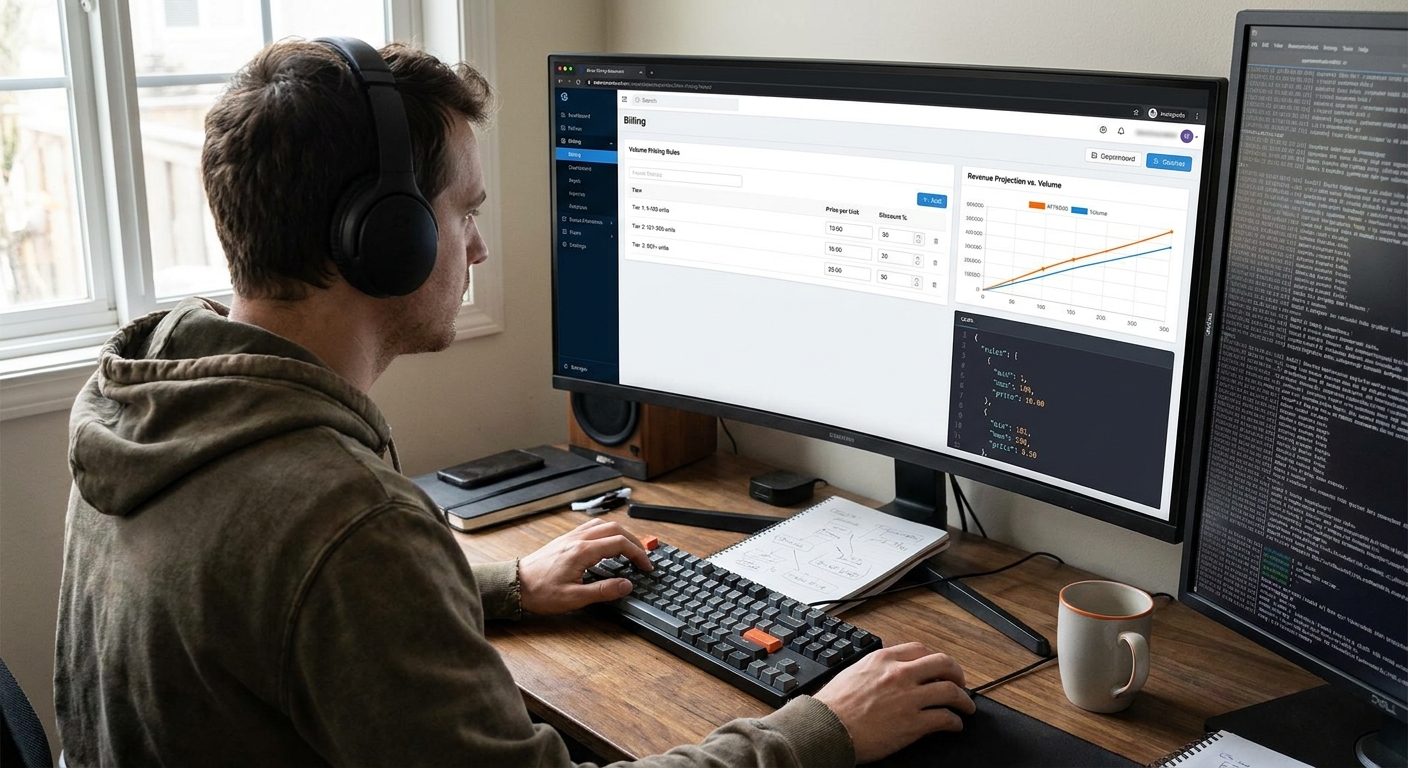
The platform has built a solid billing engine that lets you create usage‑based and volume‑discount plans without writing code. It lets you attach a metered add‑on to any subscription, set tier thresholds, and let the system calculate the final invoice automatically.
For a mid‑market API provider, you could define a free tier of 1 M calls, then charge $0.002 per call up to 10 M, and finally drop to $0.0015 for anything beyond that. The platform aggregates the usage each month and prints a single line on the invoice, so you and the customer both see a clean bill.
Key strengths include a visual plan builder, built‑in tax support, and a REST API that lets you push usage from any backend. The biggest hidden cost is the engineering time needed to set up reliable usage pipelines and occasional custom reconciliation.
- Fast setup for standard use cases, you can launch a volume plan in under an hour.
- Strong reporting, see usage graphs per customer in the dashboard.
- Extensive integrations, works with payment processors, and major financial systems.
On the downside, extremely high‑volume or bespoke rating logic may need middleware or a more enterprise‑grade platform.
When you compare it to other tools, its all‑in‑one approach means you won’t need a separate invoicing system. That’s why we rank it as the top pick for teams that want a single source of truth for subscription and volume billing.
2. Flexible Tiered & Volume Discounts
The billing platform is famous for its developer‑first API, and its volume‑pricing features are no exception. You can define price brackets that automatically apply a lower per‑unit rate once a quantity threshold is hit.
For example, a SaaS product could charge $20 per seat for the first 10 seats, $18 each for 11‑30 seats, and $15 each beyond that. The system then calculates the total based on the highest bracket reached, so the discount applies to every seat.
The platform also supports all‑units pricing, where once a customer hits a threshold the lower price rolls back to all units. This is handy for enterprise deals where you promise a flat rate after a certain volume.
Implementation is straightforward: you add the pricing rules in the dashboard or via the API, and the checkout page updates instantly. The platform also handles proration, taxes, and subscription upgrades out of the box.
- Native support for popular payment methods worldwide.
- Real‑time pricing preview for customers at checkout.
- Strong webhook system for syncing usage data.
One thing to watch: the UI can feel minimal for non‑technical users, so you may need to build a small admin panel for your sales team.
According to official documentation, volume pricing can boost average order value by encouraging larger purchases, a tactic that works well for B2B SaaS.
Its flexibility makes it a strong runner‑up, especially if you already use a unified payment solution and want to keep everything under one roof.
3. Enterprise‑Grade Volume Pricing
The subscription platform offers three pricing models: tiered, stairstep, and volume. The volume model works like this, you set a range, and once a customer’s quantity hits that range, the per‑unit price for the entire order drops to the rate of the highest tier.
Say you sell seats at $10 each for up to 20 seats, then $9 each for 21‑50 seats, and $8 each beyond 50. A buyer who orders 55 seats pays $8 per seat for all 55, not just the extra 5. The platform handles the math on the backend, so you never need a spreadsheet.
The platform shines with its hosted checkout pages, which let customers edit quantity on the fly. The “Editable Quantity” box can be toggled on, giving a smooth self‑serve experience.
The solution also bundles advanced revenue‑recognition tools, making it a good fit for enterprises that need GAAP‑compliant reporting alongside volume discounts.
- Built‑in dunning management reduces churn.
- Supports multiple currencies and tax regimes.
- Extensive analytics dashboard for tracking discount impact.
A potential drawback is that the UI can feel a bit dated, and some custom logic may require the platform’s “Add‑on” feature, which adds a layer of complexity.
The official documentation explains how to set up volume pricing in just a few clicks: pricing documentation.
Teams that need strong reporting and multi‑currency support often gravitate toward this solution, especially when they already run large B2B contracts.
4. Integrated Checkout with Volume Discounts
The solution focuses on SaaS checkout and licensing, and its volume‑discount engine lives right inside the payment flow. You define brackets, for instance 0‑49 units at full price, 50‑99 at 10 % off, 100‑149 at 15 % off, and so on, and the platform applies the discount to the whole order once the customer’s quantity lands in a bracket.
This model works well for software that ships with a per‑seat license, because the buyer sees the exact discount before they hit “Buy”. It also offers built‑in tax compliance for EU and US markets, which saves you from dealing with VAT IDs.
The checkout is fully customizable, so you can brand the page, add a coupon field, or show a usage‑based slider that updates the price live.
One thing to keep in mind: the pricing page is public, so competitors can see your discount structure. If you need secrecy, you might prefer an on‑prem solution.
- All‑in‑one checkout, tax, and compliance.
- Live price preview for customers.
- Supports one‑click upsells after discount applied.
Businesses that value a smooth checkout experience and don’t want to stitch together separate tax engines often choose this solution.
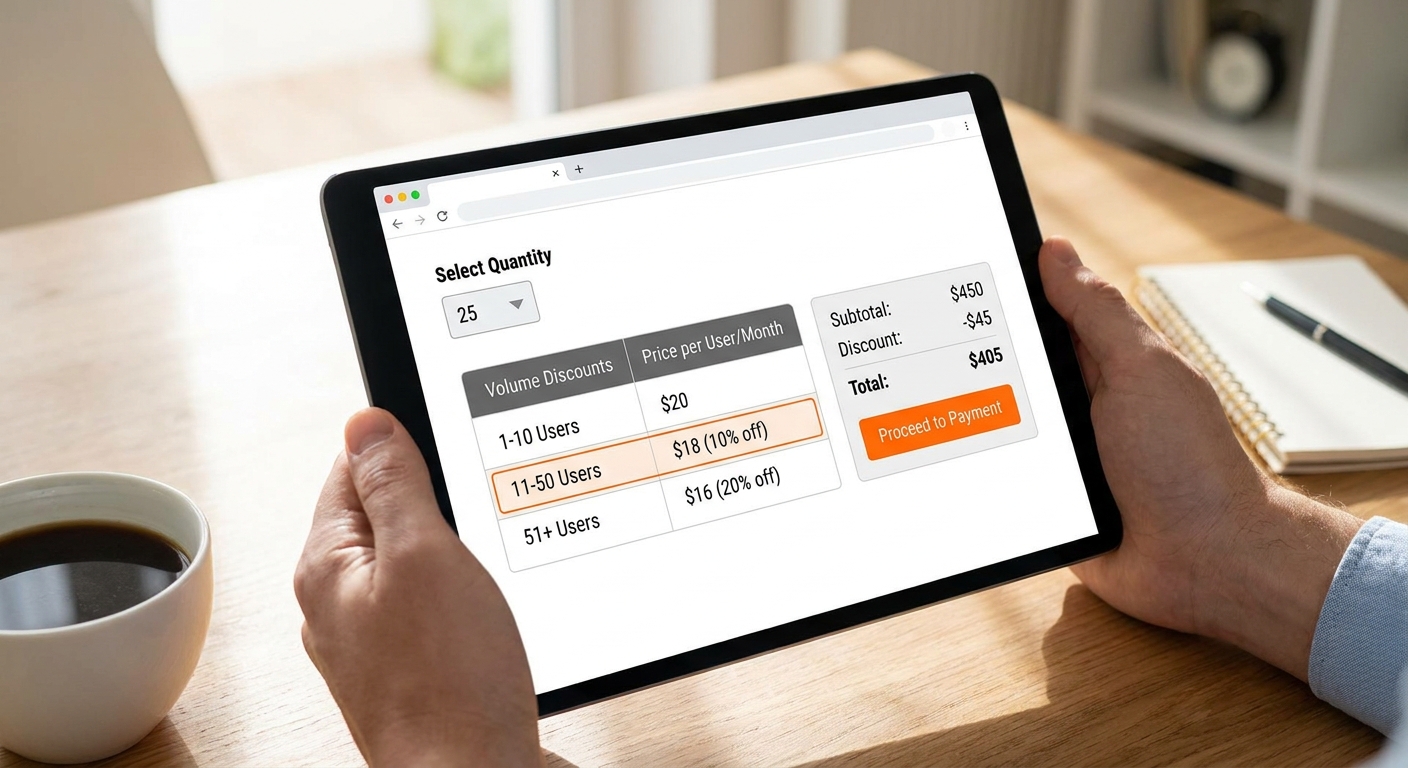
Overall, the solution gives you a tidy, branded experience, but it’s best for companies that sell directly to end users rather than through a channel partner model.
5. Unified Business Suite, Affordable Volume Pricing for SMBs
The subscription component is part of a larger business suite, making it a natural fit for small businesses already using the integrated CRM or accounting tools. Its volume‑pricing feature lets you set “price per unit” rules that drop as the quantity climbs.
Because the solution targets SMBs, the UI is simple and the pricing itself is low‑cost. You can create a plan that charges $30 per seat for up to 10 seats, then $25 each for 11‑20 seats, and $20 each beyond that. The discount is applied automatically at the point of renewal.
The platform also bundles email invoicing, automated reminders, and a portal where customers can upgrade their own plans. This self‑serve model reduces admin overhead for growing teams.
- Integrates with the whole business suite, CRM, support desk, accounting tools.
- Low monthly fee makes it budget‑friendly.
- Limited advanced reporting compared to enterprise tools.
For agencies that already live in the same ecosystem, this is a quick way to add volume discounts without a steep learning curve.
Check out Best Multi‑Tenant SaaS Platforms for Client Instances (2026) to see how this solution stacks up against other multi‑tenant options.
6. Customizable Billing Engine, Customizable Pricing Rules
The platform markets itself as a flexible billing engine that can handle any pricing rule you throw at it. Volume discounts are created via a rule‑builder UI where you pick a metric (seats, API calls, etc.) and set thresholds.
What makes the platform stand out is its “conditional discounts” feature. You can say, “If the customer has more than 5 seats AND they are on an annual contract, give 12 % off.” This lets you combine volume with contract length, a common need for enterprise sales teams.
The solution also supports usage‑based add‑ons, so you could have a base seat price and a separate metered API‑call charge that also enjoys volume discounts.
- Rule‑builder UI for complex discount logic.
- Strong API for syncing with CRMs and ERP systems.
- Higher learning curve for non‑technical users.
If you need highly tailored discount structures, the platform gives you the building blocks without needing a custom codebase.
When you compare this solution to alternative providers, the main trade‑off is that the platform leans more toward custom logic, while alternatives offer a smoother out‑of‑the‑box experience.
7. Advanced Volume & Usage Models Platform
The platform blends subscription management with a powerful “component” system. You can attach a “volume component” to any plan, set tier thresholds, and even combine it with usage‑based metrics.
For a SaaS that sells both seats and data‑processing credits, you could define a volume component for seats (e.g., 1‑10 seats at $12 each, 11‑20 at $10 each) and a separate usage component that drops per‑GB cost after 500 GB of data.
The solution also offers a “Revenue Recognition” module that helps finance teams align discounts with GAAP rules, a plus for public companies.
- Component‑based pricing for mix‑and‑match discounts.
- Built‑in dunning and churn protection.
- More expensive than some competitors for small teams.
Read about real‑world examples in AI Employee Agent Hosting: 10 Platforms Compared, where agencies praised the solution for its granular discount controls.
Overall, the solution is a solid pick for businesses that need both volume and usage pricing in the same bill.
8. Financial‑Focused Volume Pricing Platform
This platform is built for finance teams that need to see the impact of discounts on ARR and cash flow. Its volume‑pricing engine ties directly into revenue‑recognition reports, so you can model how a 15 % discount on large accounts will affect your forecast. Setting up a volume rule is done in the “Pricing Catalog”, you choose a metric, define breakpoints, and the system applies the discount to the total contract value.
Because the solution lives in the financial stack, it integrates with major ERP and CRM systems, giving a full picture from sales to finance.
- Deep financial reporting on discount impact.
- Strong integration with ERP and CRM systems.
- Less focus on checkout UX, you’ll need a separate front‑end.
For a high‑level view of SaaS pricing models, see Wikipedia’s definition of volume pricing, which outlines the economic rationale behind bulk discounts.
If your priority is finance‑grade analytics rather than a polished checkout, this platform gives you the data you need to justify volume discounts to leadership.
Buy‑ers Checklist
Before you lock in a provider, run through this quick list:
- Does the platform support tiered and all‑units volume pricing?
- Can you edit quantities in a self‑serve portal?
- Are taxes and global compliance handled out‑of‑the‑box?
- Is there an API you can use to push usage data nightly?
- Do you get reporting that shows discount‑driven revenue uplift?
Answering “yes” to most of these means you’ll avoid hidden friction later on.
FAQ
What is the difference between tiered and volume pricing?
Tiered pricing applies a different per‑unit rate to each slice of quantity , you pay $10 for the first 10 units, $9 for the next 10, and so on. Volume pricing, on the other hand, drops the per‑unit rate for the entire purchase once a threshold is reached, so all units get the lower price. The choice depends on how you want to signal discounts to customers and how your cost structure scales.
Can I mix volume discounts with usage‑based charges?
Yes. Most modern billing platforms let you attach a volume component to a subscription and also add metered add‑ons for usage. For example, you could charge a flat seat price that gets cheaper with volume, while also billing API calls at $0.001 each, with a separate volume break for the API tier.
How do I handle taxes on discounted amounts?
Tax engines usually calculate tax on the post‑discount amount. Make sure your billing tool lets you enable tax calculation after discounts are applied. Leading billing platforms often include this option built in, while some older solutions may require a custom rule.
Is it possible to offer volume discounts only to certain customers?
Absolutely. Most platforms let you flag a customer group , such as “Enterprise” or “Channel Partner” , and apply a custom discount rule just for that segment. Advanced component systems and conditional rules offered by many providers are good examples of this capability.
Do volume discounts affect revenue recognition?
They can. If you recognize revenue over time, a discount reduces the contract value, which in turn lowers the ARR you book each month. Many platforms provide built‑in revenue‑recognition modules that automatically adjust the schedule when a discount is applied.
How can I test a new volume pricing model before rolling it out?
Run a pilot with a small group of existing customers. Use the platform’s “draft” or “sandbox” mode to create the new plan, then invite a subset of users to switch. Track metrics such as average deal size, churn, and renewal rates. Once you see a positive lift, roll the plan out to all accounts.
What should I watch out for when scaling volume discounts?
Watch the margin impact. As discounts deepen, each additional seat adds less profit. Use the platform’s reporting to monitor the margin per tier. Also, avoid “price creep” , make sure the discount curve aligns with your cost‑to‑serve curve, otherwise you could end up under‑pricing high‑volume users.
Can I apply volume discounts to multi‑tenant SaaS products?
Yes. Multi‑tenant platforms treat each tenant as a separate subscription, so you can set a volume rule that looks at the number of seats per tenant. Some vendors, like Donely, even offer automatic volume‑discount ladders that apply across all instances a single customer runs.
Conclusion
Choosing the right billing platform for volume pricing can feel like a maze, but the core idea is simple: you want a tool that lets you define clear thresholds, apply discounts automatically, and give you insight into how those discounts move the needle on revenue.
An all‑in‑one billing engine with rapid setup, ideal for teams seeking a turnkey solution. A developer‑friendly API shines for those already handling payments through an existing gateway. Deep financial reporting capabilities support enterprise‑level contracts. A polished checkout experience caters to direct‑to‑consumer SaaS offerings. A budget‑friendly option serves SMBs already using an integrated business suite. Two flexible providers deliver the most adaptability for complex discount logic. A finance‑focused solution offers granular ARR impact analysis for teams that need detailed insights.
And if you’re looking for a platform that removes the headache of managing dozens of AI agents with a single dashboard, unlimited instances, and built‑in volume discounts, Donely is the clear choice. Start with the free tier, add a few agents, and watch the discount ladder kick in as you scale.
Ready to simplify your billing and grow faster? Start your free trial today and see how volume pricing can boost both your bottom line and your customers’ satisfaction.