
Agentic AI is changing how work gets done. It moves past simple chatbots and starts acting on its own to hit real goals. In this short list you’ll see the picks that matter most right now and learn what each can do for you.
We’ll walk through eight concrete examples, compare their strengths, and end with a quick FAQ so you can decide which fits your needs.
1. Autonomous Customer Support Agents , Real‑time issue resolution
Customer support teams drown in tickets. An autonomous support agent can lift that load by handling the whole request end‑to‑end. It looks at the case, decides the next best step, and runs the needed actions without waiting for a human.
Nice’s research shows that agentic AI for service can cut resolution time and boost CSAT because the AI follows a goal‑oriented plan instead of a static script. Nice explains how the technology can reason across cases and automate multi‑step workflows. The result is fewer handoffs and a smoother experience for the customer.
Imagine a shopper’s order slips through the cracks. The autonomous agent spots the missing item, updates the order, and sends a proactive email before the shopper even notices. That kind of proactive fix keeps satisfaction high and frees human agents to tackle the tricky problems.
Key capabilities include goal‑driven reasoning, contextual awareness across a customer’s history, and continuous learning from each interaction. The agent can also prioritize cases based on impact, making sure the most valuable issues get solved first.
“Agentic AI shifts support from reactive replies to proactive problem solving.”
When you need a support layer that scales without adding staff, look for a platform that offers built‑in RBAC and audit logs. That way you keep control while the AI runs the routine work.
Multi‑Agent Orchestration | Donely Hub shows how you can split a complex ticket into sub‑tasks handled by specialized agents, then stitch the answers together.
Bottom line:Autonomous support agents cut wait times, reduce handoffs, and let human reps focus on high‑value work.
2. AI‑Powered Sales Assistants , Boosting conversion rates
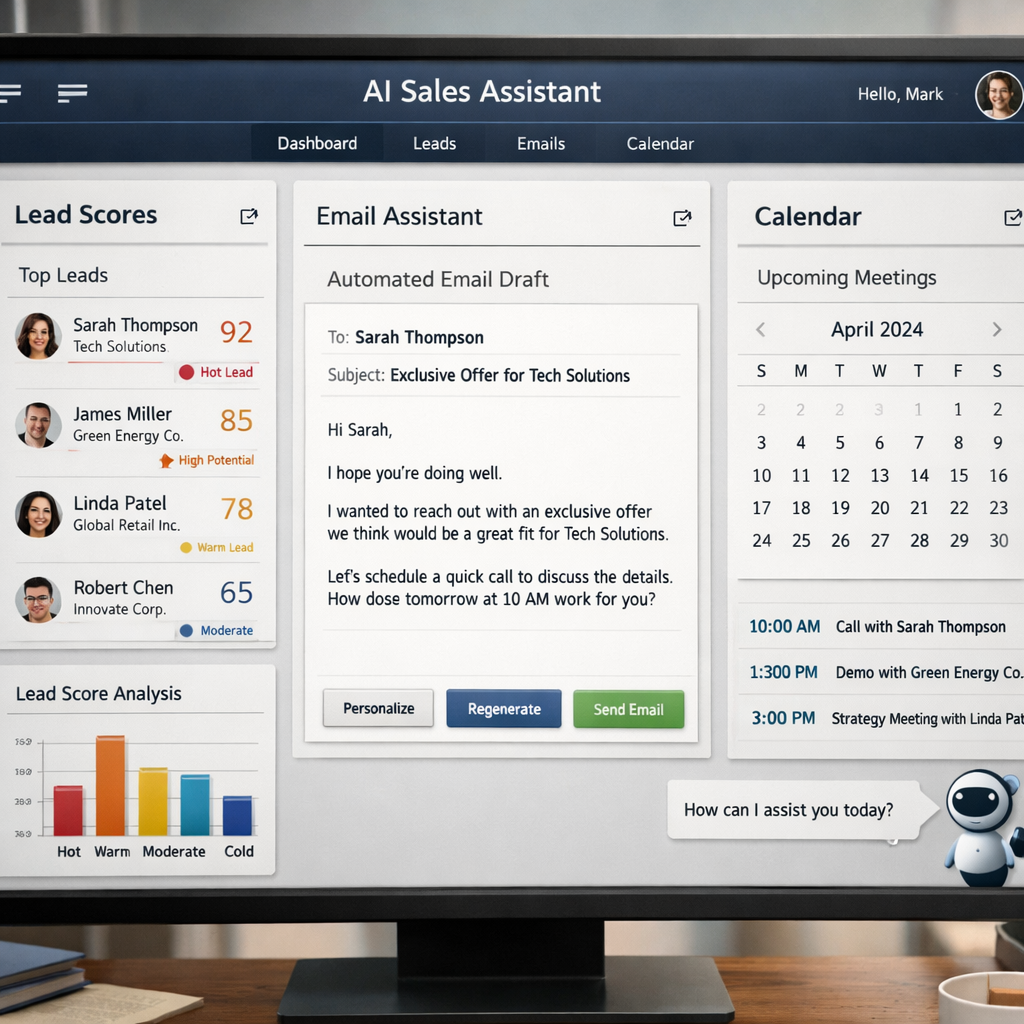
Sales teams lose deals when leads sit idle. An AI‑powered sales assistant watches every inbound signal, ranks the prospect, and reaches out at the right moment.
In retail, Kore.ai found that only 39% of firms see a real bottom‑line impact from AI because they stop at recommendation engines. The ones that win move to full‑stack agents that can book meetings, draft proposals, and update CRM records without a click. Kore.ai’s case study details how agents turn a simple query into a personalized offer in seconds.
Picture a prospect browsing a product page. The sales assistant detects the interest, pulls the prospect’s firmographic data, and sends a tailored email offering a demo slot. If the prospect replies, the assistant updates the pipeline and nudges the human rep with the latest context.
These assistants also coach reps. Mindtickle shows that AI can watch call recordings, flag missed objections, and suggest the next piece of content to share, all while logging the insight in the CRM. Mindtickle explains the coaching loop that keeps reps on track.
Pro Tip: Start with a single sales funnel (e.g., inbound demo requests) and let the assistant handle qualification, follow‑up emails, and calendar scheduling. Expand once the workflow proves reliable.
Donely’s platform lets you spin up a sales‑assistant in seconds, connect it to HubSpot or Salesforce, and keep every action logged for compliance.
Bottom line:AI sales assistants keep leads warm, automate repetitive outreach, and give reps more time to close.
3. Intelligent Process Automation Bots , Streamlining workflows
Every department has a chain of manual steps that slow things down. Intelligent automation bots take those chains and turn them into a single, self‑adjusting flow.
Moveworks notes that 92% of leaders expect measurable ROI from agentic AI within two years because the bots can plan, execute, and adapt across tools. Moveworks highlights how agents link ERP, HRIS, and ticketing systems to finish a request without human clicks. The bots watch for missing data, call the right API, and log the outcome.
Think of an employee who needs a new laptop. The bot checks inventory, opens a purchase request, routes it for approval, and notifies the shipping team, all while updating the asset register. If a step fails, the bot re‑plans and retries, or escalates with a clear summary.
IBM’s take on agentic workflows stresses that these bots differ from RPA by adding reasoning and real‑time data adaptation. IBM explains how agents can break a complex task into sub‑steps and adjust on the fly. This flexibility lets enterprises handle exceptions without breaking the whole flow.
When you pair these bots with audit logs and RBAC, you get a secure, visible automation layer that satisfies regulators and internal auditors.
Donely’s unified dashboard gives you one place to watch all bot activity, set role‑based permissions, and pull logs for compliance checks.
Bottom line:Intelligent bots automate end‑to‑end processes, adapt to changes, and keep a full audit trail.
4. Self‑Optimizing Content Creators , Dynamic media generation
Marketers need fresh, relevant content at speed. Self‑optimizing creators use agentic AI to not only write but also test and tweak in real time.
Tredence reports that AI‑driven marketing can lift engagement by up to 40%. Tredence’s analysis shows how agents generate and adapt media based on live performance signals. The AI watches click‑through rates, adjusts headlines, and swaps images on the fly.
Take a blog post about a product launch. The creator drafts the article, publishes a first version, then monitors dwell time. If readers skim the intro, the AI rewrites the hook, adds a visual, and republishes, all without human intervention.
Video content is getting similar upgrades. Forbes describes how D‑ID’s “Agentic Videos” let viewers ask questions mid‑playback, and the AI responds in context, turning passive video into an interactive experience.
Because the AI can pull data from internal analytics, it ensures every piece stays on brand and compliant. It also logs each change, so you can trace why a headline was swapped.
Donely’s platform supports multi‑step generation pipelines: idea capture, research, draft, voice matching, and publishing, all orchestrated by a single AI employee.
Bottom line:Self‑optimizing creators deliver ever‑improving media that reacts to audience behavior.

5. Autonomous Decision‑Making Systems , Strategic business insights
When executives need fast, data‑driven choices, autonomous decision‑making systems step in. They pull data from dozens of sources, run scenario analysis, and present a recommendation.
RSM explains that agentic AI can synthesize data, spot patterns, and propose actions without waiting for a report. RSM’s overview details how agents break down complex problems into sequential tasks. The system can even flag risks before a human sees them.
AWS showcases frontier agents that handle security reviews, DevOps incidents, and supply‑chain forecasts. AWS describes how these agents work from the ground up to deliver real outcomes. The agents respect defined policies, log every action, and stay within scoped permissions.
Picture a CFO reviewing quarterly spend. The decision‑making system aggregates expense data, detects an unusual rise in a cost center, runs a what‑if model, and suggests reallocating budget, all within minutes.
Because the AI operates under RBAC and audit logs, you keep governance tight, critical for regulated industries like finance and healthcare.
“Autonomous decision makers turn raw data into actionable strategy, faster than any spreadsheet could.”
Donely’s enterprise AI agents give you the same safety net: role‑based access, full audit trails, and over 800 integrations to pull the right signals.
Bottom line:Decision‑making agents turn data into strategy instantly while staying secure and auditable.
6. Comparison of Agentic AI Use Cases
All five picks solve different problems. Below is a quick side‑by‑side view to help you match a use case to your priority.
- Goal:What core outcome do you need?
- Complexity:How many systems must the AI talk to?
- Governance:Do you need strict RBAC and audit logs?
- Speed of impact:How fast will you see results?
Use this matrix to spot the sweet spot for your team. If you need quick wins, start with support or sales agents. For long‑term strategic advantage, look at decision‑making systems.
Bottom line:Choose the agent that aligns with your biggest bottleneck and governance requirements.
FAQ
What is the difference between an AI agent and a chatbot?
An AI agent can act on data, call APIs, and complete multi‑step tasks. A chatbot only answers questions based on a script. Agents keep context, make decisions, and log every action, which makes them suitable for automation beyond simple conversation.
Do I need a developer to set up these agents?
No. Platforms like Donely let you configure agents with a visual dashboard, choose integrations from a catalog, and define role‑based permissions. You can have a working AI employee in minutes without writing code.
How secure are autonomous agents?
Security comes from built‑in RBAC, audit logs, and isolated instance design. Each agent only sees the data it needs, and every action is recorded for compliance. Donely’s enterprise offering emphasizes zero‑trust controls.
Can an agent handle multiple languages?
Most modern LLMs support multilingual input and output. You can train the agent with language‑specific prompts or connect it to translation APIs, so it can serve global customers without extra effort.
What kind of ROI can I expect?
Businesses report up to 40% faster resolution times in support, 20% higher conversion rates in sales, and significant labor savings in repetitive workflows. Exact ROI depends on volume and the complexity of the tasks you automate.
How do I monitor agent performance?
Use the platform’s dashboard to view success metrics, error rates, and audit trails. Set alerts for high‑risk actions, and schedule regular reviews of logs to ensure the agent stays aligned with policy.
Is it possible to combine several agents?
Yes. You can orchestrate multiple agents to work together on a single request. For example, a support agent can hand off a complex case to a decision‑making agent that runs a root‑cause analysis, then return the insight to the human rep.
What industries benefit most from agentic AI?
All sectors see value, but finance, healthcare, retail, and SaaS companies often get the biggest gains because they have high‑volume, data‑rich processes that require quick, accurate actions.
Conclusion
Agentic AI is no longer a futuristic buzzword; it’s a practical toolkit that lets you automate, reason, and act across the whole business stack. From instant support agents that resolve tickets without human touch, to sales assistants that never let a lead go cold, to bots that glue together complex workflows, the technology delivers speed, consistency, and measurable ROI. Strategic decision‑making systems take the next leap, turning raw data into actionable insights in minutes while staying secure with role‑based controls and full audit trails. If you’re looking for a partner that gives you unlimited AI employee instances, built‑in governance, and 800+ integrations, Donely stands out as the platform that makes deployment feel as easy as clicking “Deploy”. Ready to dive deeper? Check out our AI Agents vs Chatbots guide for a detailed comparison and next‑step playbook.
Bottom line:Pick the agent that tackles your toughest bottleneck, set clear policies, and let the AI work while you focus on strategy.