
Multi agent system thinking is how teams of AI agents solve big problems. One helper can do a lot, but a team can do more. In 2026, many platforms mix tool use, memory, and security to run dozens of AI workers from one dashboard. You’ll learn which picks stand out, what makes them tick, and how to decide what fits your team. We’ll tie in research findings and usable guidance so you can choose with confidence. A key finding: RBAC (role‑based access control) is rare in this space, but Donely provides both broad integrations and built‑in RBAC, which matters for security and scale. Along the way, you’ll see how this field is evolving, from open standards to enterprise governance.
We’ll start with our top pick and then walk through 12 other strong options. You’ll get clear notes on when to use each, typical costs and constraints, and how to test them in your own environment. If you’re managing client work, a solo project, or a small agency, this list helps you map a path from quick trials to production workflows. And if you’re evaluating security and governance as a priority, you’ll see where you gain protection at scale. Finally, we share usable steps to verify compatibility with your existing stacks.
1. LangGraph , Advanced Graph Orchestration (Our Pick)
LangGraph is the engine that runs complex, multi‑actor AI workflows. It’s built for modularity, testability, and production readiness. Think of LangGraph as the conductor in a troupe of specialist agents. You can run single, multi‑agent, or hierarchical patterns using the same core runtime. It stores memory of conversations and context so sessions feel continuous, not disjointed. This matters when you have many agents sharing data, artifacts, and state. The framework also exposes streaming token outputs so you can see the agent’s steps as they happen, which helps with debugging and trust. For teams, that means you can observe, audit, and adjust behavior in real time. LangGraph is part of the LangChain family, and it’s designed to interoperate with a range of model providers and tools. LangChain multi‑agent docs provide the primary reference for patterns and best practice.
Conceptually, LangGraph supports four main patterns: decentralized networks, supervisor or hierarchical stacks, fully custom cognitive architectures, and layered, tool‑driven flows. It makes it easy to choose the right balance between control and speed. In practice, teams use LangGraph to enforce moderation, quality checks, and human‑in‑the‑loop review where needed. The framework also helps with observability: you can trace messages, artifacts, and memory of agent interactions across the graph. This visibility is essential in regulated settings where you must prove what each agent did and when. For production, LangGraph’s strength is control without locking you to a single vendor. LangGraph platform page highlights its strengths in design flexibility and production readiness.
In real teams, the choice often comes down to how much you value end‑to‑end observability and strict routing of tasks. LangGraph can be tuned for either a very centralized supervisor model or a swarm of agents that talk through a shared state. The result is a framework that scales with your requirements while keeping governance intact. Donely’s approach to OpenClaw workflows mirrors this mindset: you get a well‑defined coordinator, specialized workers, and a clear path from task to output. Multi‑Agent Orchestration | Donely Hub gives a specific look at how this pattern plays out in practice.
Authority notes: LangGraph is showcased in official LangChain docs and platform pages, which provide core guidance on agent runtimes and orchestration. For broader context on multi‑agent design patterns, see the LangChain patterns from their official materials and the LangGraph design messaging.
Why this matters for amulti agent systemdecision: you want predictable routing, clean memory, and visible reasoning so you can trust automation at scale. LangGraph is built to deliver that in production environments, with the option to plug in many model families and tools. It also maps well to enterprise needs such as RBAC, audit logs, and centralized control, critical if you work with clients or in regulated industries.
Note on security and governance
When you scale multi agent system deployments, security is not an afterthought. You’ll want access controls that map to roles, and you’ll want to log decisions and tool uses for audits. This is where Donely’s enterprise features align with LangGraph‑style architectures, offering RBAC, audit trails, and centralized governance as part of a broader agent platform story.
2. AutoGPT , Autonomous Task‑Driven Agent Framework
AutoGPT popularized the idea of autonomous task driven agents. It’s a framework that helps you spin up several agents that work on a shared goal. The core idea is to push more of the planning and action outside a single prompt. Instead, you split tasks among agents, allow them to run in parallel, and then synthesize results. The benefit is you can accelerate complex workflows, such as data processing, content generation, or research tasks. But there are trade‑offs. The complexity of coordinating many agents can be costly in compute and latency. You must balance parallelism with cost, and ensure you don’t overwhelm the system with too many tool calls.
Key patterns you’ll see with AutoGPT include: agent collaboration through a central task manager, worker agents with specialized tools, and a controller that assigns work and collects results. A usable approach is to start with a small team of 3, 5 agents and a single workflow. If that goes well, you can scale to 10, 15 agents with a more complex planning graph. You’ll also want to protect sensitive steps with RBAC, even within a single enterprise, to prevent data leaks across teams. For reference, industry discussions emphasize that multi‑agent systems shine when work can be parallelized and decomposed into discrete subtasks. You’ll often see a chain of task blocks, each assigned to a subagent.
From a usable stance, we recommend validating this stack by running a pilot with a stable data source and a clear output contract. Example: gather research articles on a topic, summarize findings, and draft a memo. Each agent can tackle a subtask (search, extract, summarize, format) and the final memo is assembled by the controller. The result is a high‑value output delivered faster than a single agent could manage. If you want a more guided path into this space, the AutoGPT repository and related community content highlight how to configure agents, workflows, and deployments for reliable automation.
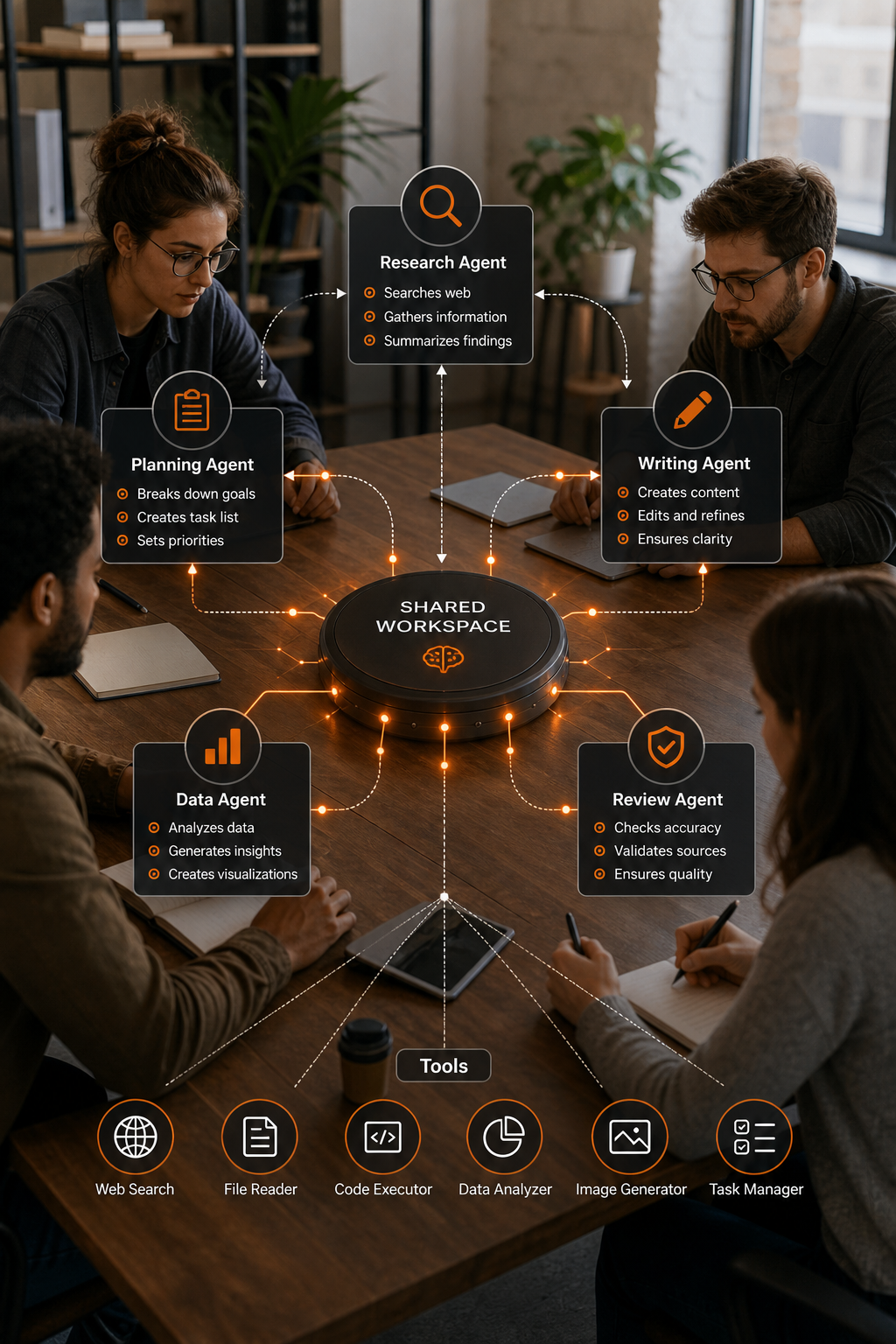
In the end, AutoGPT is a strong fit when you want rapid prototyping of agent teams and a clear handoff between planning, execution, and verification. It pairs well with LangGraph when you need structured control and observability, and with Donely’s platform for enterprise governance and secure deployment.
3. BabyAGI , Lightweight Goal‑Driven Agent Loop
BabyAGI takes a lean approach to agent loops. It focuses on a small loop: set a goal, plan steps, execute actions, and reflect on results. The loop repeats, refining the plan as new information arrives. This architecture is attractive for teams that want a simple, predictable pattern with low overhead. It’s not a one‑size‑fits‑all stack, though. For broad, enterprise‑scale tasks, a larger orchestration framework, hierarchy, and auditability are often needed. The BabyAGI loop can be sufficient for internal tooling, prototype experiments, or educational demos where speed to first results matters.
When you scale beyond a single loop, you’ll want to introduce subsystems: a planner, a memory module, and a safety guard. A common setup is to create a supervisor agent that delegates work to specialized workers. You can then layer a memory store to retain key findings across iterations, plus an evaluative agent that checks outputs against goals. For teams building production apps, expect more strong patterns such as hierarchical supervision, cross‑agent communication, and strict version control of prompts and tools. To explore specific implementations, you can study how LangGraph patterns support layered control, while keeping the overall design easy to test and reason about.
[VIDEO: Multi‑agent Systems Explained in 17 Minutes , overview of four architectures and example patterns]
Usable takeaway: start small with BabyAGI, then grow into a supervisor/worker pattern when needed. This keeps you focused on delivering value while avoiding over‑engineering early on.
4. CrewAI , Collaborative Crew of Agents for Complex Workflows
CrewAI is designed around a crew of agents that work together to automate enterprise workflows. The platform emphasizes collaboration with tools and enterprise apps, central governance, and monitoring. It’s a good fit for teams that want to deploy a fleet of agents across departments, with centralized management and a common security posture. In practice, you’ll see a hub that holds a set of specialized agents, each with its own tools and memory. The payoff is faster throughput across multi‑step tasks, with more predictable handoffs between agents.
From a design lens, CrewAI supports various orchestration styles, including reactive, plan‑act, and deterministic flows. The choice depends on your risk tolerance and the needed predictability. If your team needs to enforce strict approvals for sensitive actions, you’ll want a deterministic path with guardrails. If you aim for exploratory work, a reactive or plan‑act model may be better. The platform also includes a visual editor for non‑developers to assemble flows, which helps accelerate adoption in marketing, finance, and support workflows.
Operational takeaway: use CrewAI to split a big workflow into sub‑work streams, route tasks to the right specialists, and keep end‑to‑end visibility through logs and dashboards. This approach helps scale AI work without sacrificing control. For a broader view on governance and deployment, see Donely’s enterprise materials that discuss centralized management and security patterns for agent fleets.
5. OpenAI Function‑Calling Agents , Built‑in Tool Usage
Function calls give agents a clean way to call external tools and services. In practice, an agent can expose a function signature, with a defined JSON schema for inputs and outputs. The host then triggers the function and returns the results back to the agent. This approach keeps tool usage explicit and verifiable. It’s a natural fit for workflows that require structured data exchange with APIs, databases, or internal services. When building with function calls, you usually design a few core operators, plus a set of fallback paths if a function fails or returns unexpected data.
One of the trade‑offs is latency. Every function call adds a step in the chain, so you’ll want to balance the number of calls with the value they provide. A common pattern is to route high‑value tasks to a small group of trusted tools and reserve more exploratory work for a larger pool of agents. You’ll also want to ensure proper input validation and strong error handling to avoid cascading failures. For teams using this pattern, a well‑defined interface contract helps keep behavior predictable as you scale.
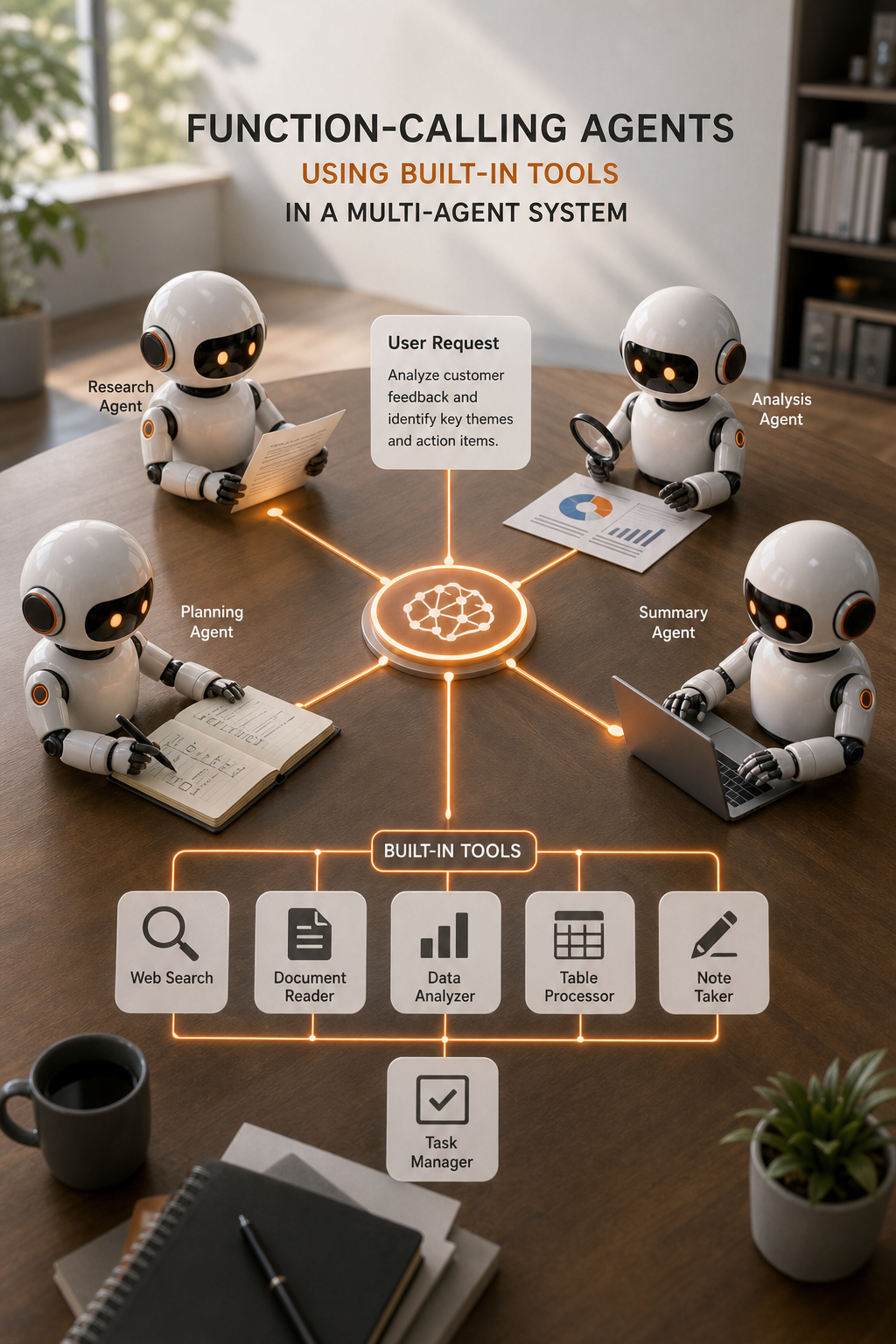
From a governance lens, it’s wise to log every tool invocation and its outputs. That creates a clear trail for audits and debugging. This pattern pairs well with Donely’s RBAC and audit logs, making it easier to track who used which tool and for what purpose. If you’re curious about broader tool integration patterns, you can explore how API tools, prompts, and memory come together in LangGraph and other platforms.
6. DeepMind AlphaCode Agents , Code Generation Multi‑Agent System
AlphaCode‑style agents tackle coding tasks by splitting the work into modular subtasks. The idea is to chain agents that specialize in planning, coding, testing, and reviewing. A multi‑agent approach here helps manage the complexity of software development. The architecture can incorporate a shared memory to track decisions and a set of validators (linting, tests, security checks) that catch mistakes early. The result is higher quality code, produced faster, with built‑in guardrails to catch issues early in the pipeline. However, the hidden cost is coordination overhead. You’ll need a strong orchestration pattern to keep all agents aligned and avoid duplication of effort.
In real‑world use, AlphaCode‑style agents can partner with an infrastructure workflow that checks for policy and security constraints using a separate agent set. A multi‑agent workflow can also hook up to Terraform or CloudFormation through an explicit validator step to ensure correctness before deployment. The key is to keep the loop tight, observable, and auditable. Then scale by adding more agent roles that specialize in different aspects of code quality and security.
Insight: multi‑agent code workflows work best when you split roles rather than stuffing all logic into a single chain. This aligns with the larger trend toward modular, observable agent stacks in enterprise environments.
7. IBM Watsonx Orchestrator , Enterprise Multi‑Agent Platform
Watsonx Orchestrator acts as a central hub for coordinating agents, tools, workflows, and foundation models. It supports multiple orchestration styles, React for open exploration, Plan‑Act for structured execution, and deterministic flows when predictability matters. The platform emphasizes governance, observability, and auditability, so teams can see how decisions are made and adjust as needed. You can route work to different agents and models in real time, reducing handoffs and delays. It also supports a catalog of IBM and partner‑built agents and templates, which helps speed up deployment.
Operationally, IBM highlights the ability to mix models from multiple providers and to govern how agents share context and divide work. This is a core capability for large teams that need to standardize behavior across many client engagements or internal units. The platform’s emphasis on security and lifecycle governance makes it a usable choice for regulated industries. For more on enterprise guardrails, see the partnered material that outlines governance, observability, and policy enforcement in agent orchestration.
18% RBAC support across MAS platforms
And a note on a usable route: many teams lean on Donely’s enterprise materials to understand how to apply RBAC and audit logs at scale. For governance‑focused readers, Enterprise AI Agents , Zero‑Trust Security & Governance – Donely offers a specific lens on how to apply those controls in real deployments.
8. Google Cloud Agent Builder , Scalable Agent Services on GCP
Google’s approach to multi agent system work spans an agent development kit, an agent engine runtime, and cross‑cloud interoperability through an Agent2Agent protocol. The ADK aims to simplify building agents that run on Gemini and Vertex AI while keeping governance intact. The Agent Engine provides a managed runtime with testing, release, and reliability at scale. The goal is to connect agents across the enterprise and support an open ecosystem for agent communication. This approach emphasizes scale, reliability, and an open, interoperable protocol for agent communication.
In practice, this stack helps teams ground AI workflows in real data and real tools, enabling accurate and auditable outputs. It’s especially useful for organizations already running Google Cloud data stores and services and who want a unified agent platform that fits into their existing tooling. For readers who want to see a broader view of how Google supports multi‑agent systems, the Vertex AI product blog outlines the steps for building and managing agents with enterprise controls.
9. Microsoft Semantic Kernel , Modular AI Agents Toolkit
Semantic Kernel offers an agent framework that emphasizes modularity and collaboration. Agents can be built to work with tools, models, and human inputs. The kernel provides a way to orchestrate agents with patterns that support concurrent work and cross‑agent coordination. While documentation access requires sign‑in, the architecture aims to provide a usable path for developers to build agentic apps with strong type safety, session memory, and middleware. In practice, this toolkit supports a broad range of agent patterns, from simple to highly complex.
For teams investing in enterprise governance and integration with AutoGen patterns, the Agent Framework and MCP (Model Context Protocol) concepts provide a clear anatomy for connecting AI agents to data and tools in a standardized way. This reduces the cost and risk of evolving AI workflows in large organizations.
10. LangChain Agents , Flexible Agent Abstraction for LLMs
LangChain’s take on agents emphasizes a spectrum: sometimes a single agent with strong tools is enough; other times you need a router, subagents, or a skills approach. The blog and pattern literature describe four common patterns: subagents, skills, handoffs, and routers. The subagents pattern uses a supervisor agent to call specialized subagents as tools. Skills are on‑demand on a single agent. Handoffs transfer control between agents as a conversation evolves. Routers split a query and synthesize best results from diverse sources. This framework helps teams pick the simplest pattern that meets their needs and scale as work grows.
LangChain also promotes interoperability: the Agent Protocol is designed so different frameworks can communicate. This is a usable step toward production‑grade agent systems across tools and vendors. The LangChain guidance is a good map for teams choosing between patterns and architectures.
11. Agentverse , Decentralized Swarm Architecture
Agentverse studies the shift from classical multi‑agent models to swarm‑style, foundation model‑powered systems. The literature compares CMAS and LMAS, classical MAS with rule‑driven design against large foundation model‑driven multi‑agent systems. The central themes are how agents perceive, communicate, decide, and act in distributed settings. LMAS adds semantic reasoning and flexibility, which helps when tasks span open, dynamic environments. The takeaway is that these architectures are not isolated from each other; they can complement one another.
In practice, teams building distributed AI can use a swarm pattern to boost parallelism while keeping governance through a supervisory layer or a central registry. The research hints at many future directions for hybrid designs that combine the strengths of both worlds.
12. MCP (Multi‑Component Platform) , Customizable Cognitive Stacks
Model Context Protocol (MCP) is designed to standardize how AI agents talk to data, tools, and prompts. It creates a universal interface for resources, tools, and prompts so agents can work with any data source or service through a single contract. This approach reduces integration complexity when you scale across providers and data sources. MCP aims to support deterministic, structured access to data via Resources, and tool calls via a defined JSON schema. The goal is predictable behavior and easier governance.
In practice, MCP helps teams avoid ad‑hoc glue code by providing a typed intermediate layer and a shared protocol. This makes it easier to test and certify agent flows, while preserving the flexibility to swap data sources or tools as the landscape evolves. For teams investing in formal policy and governance, MCP can help align with enterprise controls and compliance requirements.
13. Prompt‑Engineered Swarm , Open‑Source Swarm Framework
Prompt‑Engineered Swarm refers to open‑source swarm frameworks that emphasize prompt engineering as a coordination backbone. These projects aim to provide modular patterns for splitting work across agents, coordinating tasks, and synthesizing results. The idea is to keep the prompts explicit, the roles narrow, and the data flows well defined. For teams exploring open source paths, these projects offer a low‑cost way to experiment with swarm concepts. They also provide a platform to test out different coordination topologies, such as subagents, routers, and handoffs, without heavy vendor lock‑in.
When evaluating open source swarm stacks, look for clear schemas for messages, a strong memory layer, and a governance story that fits your data and security needs. The field is evolving, but the core ideas, modularity, parallelism, and controlled coordination, remain stable across approaches.
FAQ
What is a multi agent system and when should I use one?
A multi agent system is a group of AI agents that work together to solve a problem. You use it when a task is too big for one agent, when work can be split into parallel parts, or when domain specialization improves results. Think of a team of agents each with a skill. They share data, coordinate actions, and deliver a combined output. Use it when you want speed, resilience, and scalability, and when you need to handle complex, multi‑step workflows.
How do I pick the right framework for a multi agent system?
Start with your task type. If you need central control and auditability, pick a framework with strong governance. If you want lots of parallel work, pick one that supports a swarm or router pattern. Check tool integration, memory, and RBAC. Consider how easy it is to test and deploy. Finally, map to your current stack and cloud preferences so you aren’t forced into a new set of tools.
What security features matter most in a multi agent system?
RBAC (role‑based access control) is essential so you can assign permissions by role. Audit logs are critical for tracing actions and tool calls. Isolation, container boundaries, and per‑agent permissions help prevent data leaks. Finally, deterministic flows reduce risk by limiting how agents decide and act. Security isn’t a single feature; it’s an integrated pattern across the platform.
How do I test a multi agent system before production?
Run small pilots with a tight scope, clear inputs, and measurable outputs. Use a sandbox for models and tools, track decisions in logs, and test edge cases. Validate each agent’s output against your goals, then test end‑to‑end with real scenarios. Use observability tools to monitor latency, token usage, and failures. A staged rollout helps you catch issues early before wide adoption.
What kind of maintenance does a multi agent system require?
Regular reviews of prompts, tools, and memory are needed. You’ll want versioned workflows and a change log. Monitor agent outputs for drift and keep security policies up to date. Periodically re‑run tests and adjust governance rules as your business needs evolve. The system should be auditable and reproducible, so operators can reproduce a run if something goes wrong.
Can a multi agent system help with customer support at scale?
Yes. A team of agents can triage tickets, fetch knowledge, draft responses, and hand off complex cases to humans. You can route tasks to specialized agents for sentiment checks, knowledge base lookups, or CRM updates. The key is to keep the handoffs clean, data access restricted, and outputs auditable. A fleet approach helps you scale without sacrificing quality.
Conclusion
In 2026, the multi agent system space spans open‑source stacks, cloud‑native runtimes, and enterprise platforms. The picks above give you a spectrum from lean, quick‑to‑start patterns to full governance, RBAC, and centralized control. The right choice depends on your task form, team size, and security needs. LangGraph stands out for architectural flexibility and observability. AutoGPT, BabyAGI, CrewAI, and the OpenAI function‑calling patterns offer usable routes for rapid experimentation and scale. Enterprise options from IBM, Google, and Microsoft fill the needs of teams that require governance, policy controls, and cross‑vendor resilience. The key to success is starting small, validating outcomes, and then growing your agent fleet with clear contracts and audit trails.
If you want a deeper look at secure, scalable agent management, s and use cases that describe how to deploy OpenClaw agents in seconds, manage unlimited AI employees, and keep governance tight. Multi‑Agent Orchestration | Donely Hub is a good starting point for usable deployment patterns. And if you’re weighing enterprise guardrails, the Enterprise AI Agents page offers a governance lens you can apply to any framework. Enterprise AI Agents , Zero‑Trust Security & Governance – Donely