
AI agents are reshaping how apps act on data. They can read emails, book meetings, or even run research without a human clicking each step. In this list you’ll see the five frameworks that dominate the market right now, learn what each one does best, and get tips on matching them to real work. Let’s start.
1. LangChain , Versatile Open‑Source Framework
LangChain powers many production‑grade agents today. It started as an open‑source library and now ships a full stack that includes LangGraph, Deep Agents, and the LangSmith observability platform. The recent partnership with NVIDIA adds GPU‑optimized execution, speculative branching, and a secure sandbox called OpenShell. All of that lets developers move from prototype to a multi‑step workflow that can run for hours without manual intervention.
The framework’s core idea is simple: treat an agent like a program made of nodes. Each node can call a model, hit an API, or store state. LangGraph then runs those nodes, automatically parallelising independent branches. That cuts latency dramatically, especially for long‑running tasks such as data‑heavy research or multi‑document summarisation.
Beyond speed, LangChain adds deep monitoring. LangSmith has logged over 15 billion traces and 100 trillion tokens, giving you distributed tracing, cost dashboards, and AI‑powered debugging. If a step fails, the platform can auto‑retry or alert you with a natural‑language summary.
For teams that need security, the NVIDIA NeMo Guardrails integration enforces content policies at runtime. That means the agent can refuse harmful requests before they reach your backend.
LangChain’s ecosystem is huge. Over a billion downloads show a vibrant community, and many third‑party tools plug directly into its SDK. If you already have a Python codebase, you can add LangChain in a single import and start building stateful agents.
Want to see ready‑made templates and vetted connectors? Check out Top AI Agent Marketplace Resources & Tools 2026. The marketplace lists pre‑built agents that run on LangChain with just a few clicks.
2. AutoGPT , Autonomous Agent Builder
AutoGPT was one of the first tools to chain LLM calls in a loop. It reads a high‑level goal, breaks it into subtasks, runs each via a tool, and then reflects on the result before moving on. The loop runs until the goal is met or a stop condition triggers.
Because the core loop is pure Python, AutoGPT can run on any machine that has Python 3.10+ and an OpenAI API key. That makes it flexible but also means you need to manage the environment yourself , virtual‑env setup, dependency pinning, and token budgeting are all on you.
In practice AutoGPT shines on text‑heavy pipelines: drafting reports, generating code, or researching topics. It excels when the task requires many reasoning steps and the output is mostly text.
However, AutoGPT does not control a graphical desktop. If you need to click buttons, scroll pages, or interact with a local app, another framework will be a better fit.
Security is a mixed bag. The plugin system lets the agent load arbitrary Python code, which can be risky on a production server. Most teams sandbox the process or run it in a container to avoid accidental file writes.
When you compare cost, AutoGPT itself is free, but the LLM calls it makes can add up. Each loop iteration usually consumes a few hundred tokens, so a long chain can become pricey.
3. AgenticGPT , Scalable Cloud‑Hosted Agents
AgenticGPT is a managed SaaS platform that hosts agents on a cloud fleet. You write a prompt that describes the goal, the service spins up an instance, and the agent runs until it finishes or hits a timeout.
The biggest advantage is zero infrastructure. You don’t install Docker, manage virtual envs, or patch libraries. The platform also offers a visual canvas where you can drag‑and‑drop tools, set up triggers, and monitor runs.
Because the service runs in the cloud, you get built‑in scaling. If ten users ask the same agent at once, the platform automatically adds more workers. That makes it a good fit for customer‑facing bots that see burst traffic.
AgenticGPT also bundles a library of pre‑built integrations , Slack, Discord, Gmail, and dozens of SaaS apps. You connect an API key once and the agent can call the service without extra code.
When you need fine‑grained control, the platform lets you upload custom tool definitions as JSON. That lets you extend the agent with any REST endpoint you own.
For a deeper look at building no‑code agents, see No‑Code AI Agent Builder: The 2026 Founder’s Guide. The guide walks through setting up a simple workflow on a hosted platform, which is the same pattern AgenticGPT follows.
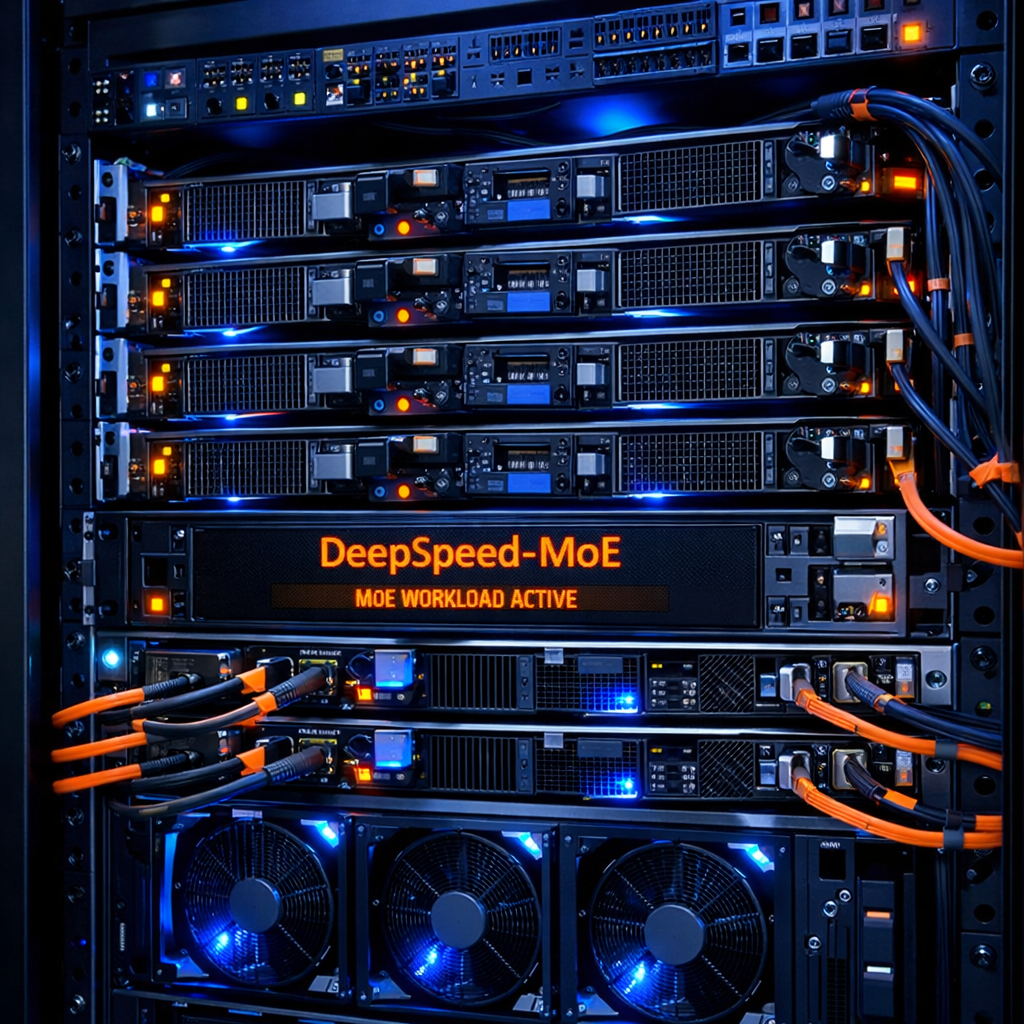
4. DeepSpeed‑MoE Agents , High‑Performance for Large Models
DeepSpeed‑MoE (Mixture‑of‑Experts) is a research‑grade system from Microsoft that lets you run massive language models with only a fraction of the compute. By routing each token to a small subset of expert layers, you can train or infer models that have hundreds of billions of parameters on a single GPU.
When you pair DeepSpeed‑MoE with an agent framework, the agent can call a huge model for complex reasoning while keeping latency low. The MoE routing happens at the token level, so the model only activates the experts it needs for the current context.
Using DeepSpeed‑MoE requires a Linux host with CUDA and a recent PyTorch build. The library provides a simple API: you wrap your model, set the number of experts, and the runtime handles load‑balancing.
In production, the biggest win is cost. A 100‑billion‑parameter MoE model can run for under $0.10 per 1 M tokens, compared to $0.30‑$0.50 for a dense model of similar capability.
Because the system is low‑level, you need to build your own orchestration layer or plug it into an existing framework like LangChain. That adds engineering effort but gives you full control over model selection, memory management, and scaling policies.
Security comes from the fact that the model runs in a container you own. You can enforce network policies, audit logs, and role‑based access control (RBAC) on the host.
5. Microsoft Semantic Kernel , Integrated with Azure
Semantic Kernel (SK) is Microsoft’s open‑source library for building AI‑powered apps. It ships a set of agents, including the Azure AI Agent, which bundles tool calling, thread‑based memory, and built‑in connectors to Azure services like Bing, Azure Search, and Azure Functions.
What makes SK stand out is its tight integration with the Azure ecosystem. You can spin up an Azure AI Agent with a few lines of code, and it automatically handles authentication, token refresh, and secure storage of secrets.
The Azure AI Agent also supports a persistent thread object. That means the conversation state lives in Azure Blob storage or a Cosmos DB collection, giving you durable memory across sessions.
Security is baked in. The SDK uses Azure Identity for RBAC, letting you grant the agent only the permissions it needs. Audit logs are written to Azure Monitor, so you can trace every tool call.
If you prefer a managed experience, the Azure AI Agent can be deployed with Azure Container Apps, giving you auto‑scaling and zero‑maintenance hosting.
Looking for a quick way to host a desktop‑control agent? Try Host OpenClaw on Donely, which gives you a managed OpenClaw instance with RBAC and audit logs.
For the official specs, see Microsoft Semantic Kernel documentation.
What to Look For When Choosing an AI Agent Framework
Picking the right framework isn’t about who has the flashiest UI. It’s about matching capabilities to the problem you need to solve. Below is a quick checklist you can run with your team.
- Scalability:Can the platform handle dozens of concurrent agents? Look for multi‑instance support or built‑in auto‑scale.
- Integration breadth:Does it speak to the tools you already use , CRM, ticketing, cloud storage?
- Security features:Check for RBAC, audit logs, and sandboxed execution.
- Observability:Are there traces, logs, or dashboards that let you spot failures fast?
- Cost model:Token‑based pricing can explode on long loops; credit‑based or flat‑rate plans may be safer.
Ask yourself how many agents you plan to run in parallel. If you need unlimited multi‑instance orchestration, Donely’s platform currently offers the only solution that lists “unlimited multi‑instance support” as a core feature. That alone can save weeks of custom engineering.
Comparison of the 5 Frameworks
All five frameworks have strengths, but they differ on three axes that matter most to teams today: deployment effort, integration depth, and enterprise‑grade security.
- LangChain:Open‑source, steep learning curve, best for custom pipelines. Strong observability, GPU acceleration via NVIDIA partnership.
- AutoGPT:Simple Python loop, great for text‑only tasks. Requires you to manage environment and security.
- AgenticGPT:Fully managed SaaS, visual builder, auto‑scales. Slightly less flexible for exotic toolchains.
- DeepSpeed‑MoE:Research‑grade performance for giant models. Needs heavy infra ops, but cheapest for token‑heavy workloads.
- Semantic Kernel:Azure‑first, built‑in RBAC, persistent threads. Ideal for enterprises already on Azure.
When you map those points to your needs, the decision becomes clearer. If you need unlimited multi‑instance orchestration with built‑in RBAC, the Donely platform fills that gap, while the other frameworks either lack multi‑instance support or provide only basic security.
FAQ
What is an AI agent framework?
An AI agent framework gives you the plumbing to build autonomous bots that can reason, call tools, and keep state across turns. It abstracts LLM calls, tool integrations, and memory handling so you can focus on business logic rather than low‑level API work.
Do I need to write code to use these frameworks?
Not always. LangChain and DeepSpeed‑MoE expect Python code, while AgenticGPT and Semantic Kernel offer visual or low‑code interfaces. AutoGPT lives in a Python config file, but you can launch it with a single command.
Which framework scales best for hundreds of simultaneous agents?
AgenticGPT and Semantic Kernel both provide managed scaling out of the box. DeepSpeed‑MoE can also scale, but you must provision the GPU fleet yourself. LangChain can scale with Kubernetes, but that adds ops work.
How do these frameworks handle security?
Security varies. Semantic Kernel uses Azure Identity for RBAC and writes audit logs to Azure Monitor. LangChain can sandbox agents with NVIDIA OpenShell. AutoGPT’s plugin system is the most open, so you should run it in a container. DeepSpeed‑MoE inherits the host’s security policies, and AgenticGPT offers built‑in role controls.
Can I connect an agent to my existing SaaS tools?
All five frameworks support HTTP‑based APIs, but the ease differs. AgenticGPT ships with dozens of pre‑built connectors. LangChain offers a rich plugin ecosystem. Semantic Kernel has native Azure Functions integration. AutoGPT and DeepSpeed‑MoE require you to code the connector yourself.
Is there a free tier to try these out?
Only a few frameworks list a free tier publicly. AgenticGPT offers a limited sandbox, and AutoGPT is fully open‑source. LangChain and DeepSpeed‑MoE are free to use, but you still pay for compute. Semantic Kernel can be run on Azure’s free tier, though you’ll hit limits quickly.
Conclusion
Choosing an AI agent framework is less about hype and more about fit. LangChain delivers deep customisation and observability for teams that can invest in ops. AutoGPT offers a lightweight, text‑focused loop but demands careful security handling. AgenticGPT removes the infra burden and lets you prototype fast in the cloud. DeepSpeed‑MoE unlocks massive model capacity at a lower token cost, at the price of added engineering effort. Semantic Kernel shines for Azure‑centric enterprises that need built‑in RBAC and persistent threads.
Across the board, the biggest gap in the market today is unlimited multi‑instance orchestration with enterprise‑grade security. Donely fills that gap with a single dashboard, RBAC, audit logs, and 800+ integrations. If you’re building an AI workforce that must run dozens of agents in parallel, start with Donely’s platform to avoid the hidden ops costs other tools incur.
Ready to see how an AI agent can automate a real task in seconds? for step‑by‑step demos and jump straight into a free trial.